Lunch & Learn for architects & MEP engineers

The PTAC sleeve should keep water out. Not bring it in.

A practical lunch session on PTAC drainage, water intrusion and the code details that prevent costly problems after the hotel opens.

Free for your company At your office Lunch provided
Where the problem starts TO SCALE
7/16″
Typical outlet
3/4″
NeverLeak™ drain
Most sleeves step a ¾″ riser down to a 7/16″ outlet, hidden behind the unit where nobody checks it.
Miami-Dade NOASleeve + louver assembly
+71% larger drain
opening (dia.)
MIAMI-DADE NOA22-0914.08
FLORIDA APPROVALFL# 40680.1-R2
PATENTED DESIGN3 U.S. patents
MANUFACTUREDIn the USA
The problem

The problem starts with the sleeve.

Water that can't drain ends up in the guest room: damaged flooring, odor, rust-stained façades and rooms out of service. On a 120-room hotel, the same detail repeats 120 times.
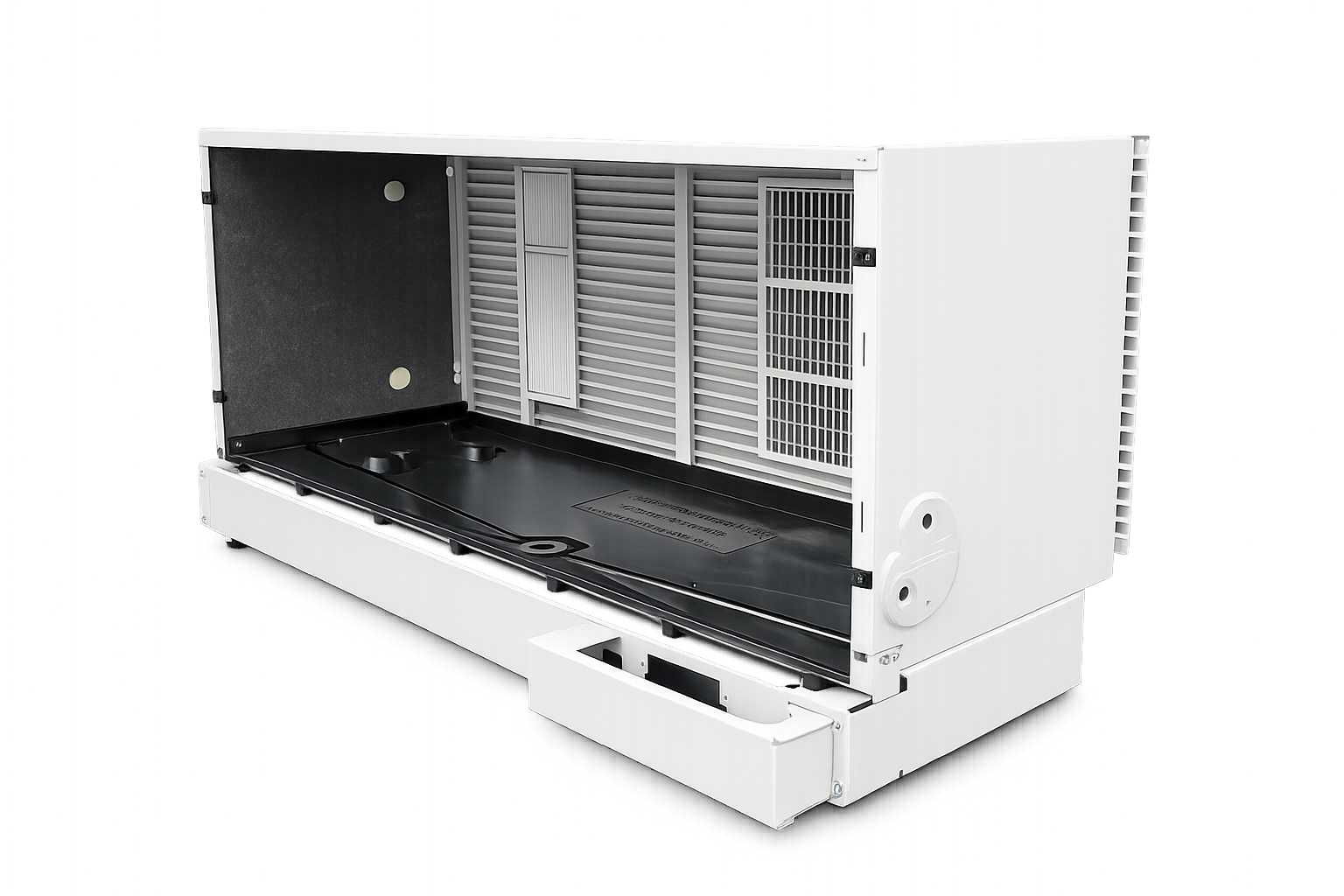
Champion NeverLeak PTAC sleeve on its sub-base, open to show the sloped pan and molded-in drain
NeverLeak™ sleeve with sub-base and drain kit
Typical PTAC sleeve7/16″ OUTLET
Flat metal pan where condensate sits Small field-installed drain that clogs with algae Pan rusts and stains the building exterior Chassis comes out for routine maintenance
PATENTED
NeverLeak™ sleeve3/4″ DRAIN
Sloped pan that moves water to the drain Molded-in ¾″ drain sized to the condensate riser Non-metal pan that can't rust Algaecide slot, serviced without pulling the chassis
The session

What your team will learn

Designed for teams that design, specify, and select PTAC systems.

01

Drainage & water management

How different sleeve designs handle condensate, and why it matters.

02

Building code requirements

Relevant IPC and IMC requirements: drain sizing, secondary drainage, maintenance and louver protection.

03

What to look for in a sleeve

The design details to evaluate before a sleeve goes into your drawings.

04

Hurricane & impact

Why an impact louver alone isn't enough, and how sleeve and louver are approved together.

05

Writing it into the spec

The documents your team needs when specifying PTAC sleeves for hospitality.

Every attendee leaves with spec sheets, CAD details and approval documents. Request a date →
From a recent session · August 2026

It was clear that a lot of thought has gone into designing a product that addresses common water-management issues and improves drainage performance.

TT Tim ThompsonPlumbing Plans Examiner, City of Fort Lauderdale

Frequently asked questions

What does a session look like?+

About 60 minutes over lunch: a short presentation, a hands-on look at a real sleeve, and open Q&A on your current projects.

Is there a cost?+

No. The session is free and lunch is on us.

Does it qualify for continuing education credit?+

Yes. Our AIA CES–approved course, “Code Compliance for PTAC Sleeves in Packaged Terminal Air Conditioning Systems: Mechanical, Plumbing, and Building Requirements,” offers 1 LU|HSW credit. Course number: CPTAC-LL-001.

Where do you present?+

We visit the state of Florida and out of the state we can do a virtual session.

Can you also cover windows and storefront?+

Yes. Our sister company runs a session on the full opening. See the Champion Glass Lunch & Learn.

Request a session

Before you specify the sleeve, know what you're specifying.

1Send the request
2We contact you within one business day to coordinate a date
3We bring lunch and a real sleeve
Prefer to call? 954-568-3400
Scroll to Top